

Returning home after vacation in Dubai can be a relief, but it is worth pausing before switching everything back on and settling in. A property left closed during the summer may have developed small leaks, stale water, drain odours, humidity, pest activity, or AC issues while you were away.
From years of helping Dubai residents keep their homes in good condition, we know that a quick inspection can help you spot problems early, avoid further damage, and restart your home safely. This guide explains what to check first, how to bring key systems back into use, and when it is best to call a professional.
Key Takeaways
- Returning to a property after a summer away requires checking for common issues like leaks, AC faults, and humidity.
- A systematic inspection of your home’s plumbing, electrical, and cooling systems ensures a safe and smooth restart.
- If you encounter persistent problems, professional maintenance is the recommended way to prevent further damage.
Why Are After-Summer Travel Home Checks Important?
Dubai’s summer heat can affect a home even when no one is there. AC systems and appliances may have been working under extra strain, while a minor leak or drainage issue could have gone unnoticed for days or weeks.
Water left sitting in pipes may smell or look unusual at first, and water in little-used drain traps can evaporate, allowing unpleasant odours into bathrooms or kitchens. Closed rooms may also trap humidity, encouraging musty smells, mould, or pest activity.
An internal electrical fault, a disrupted circuit, or an appliance issue may also affect refrigerators, routers, security cameras, and smart-home devices while you are away.
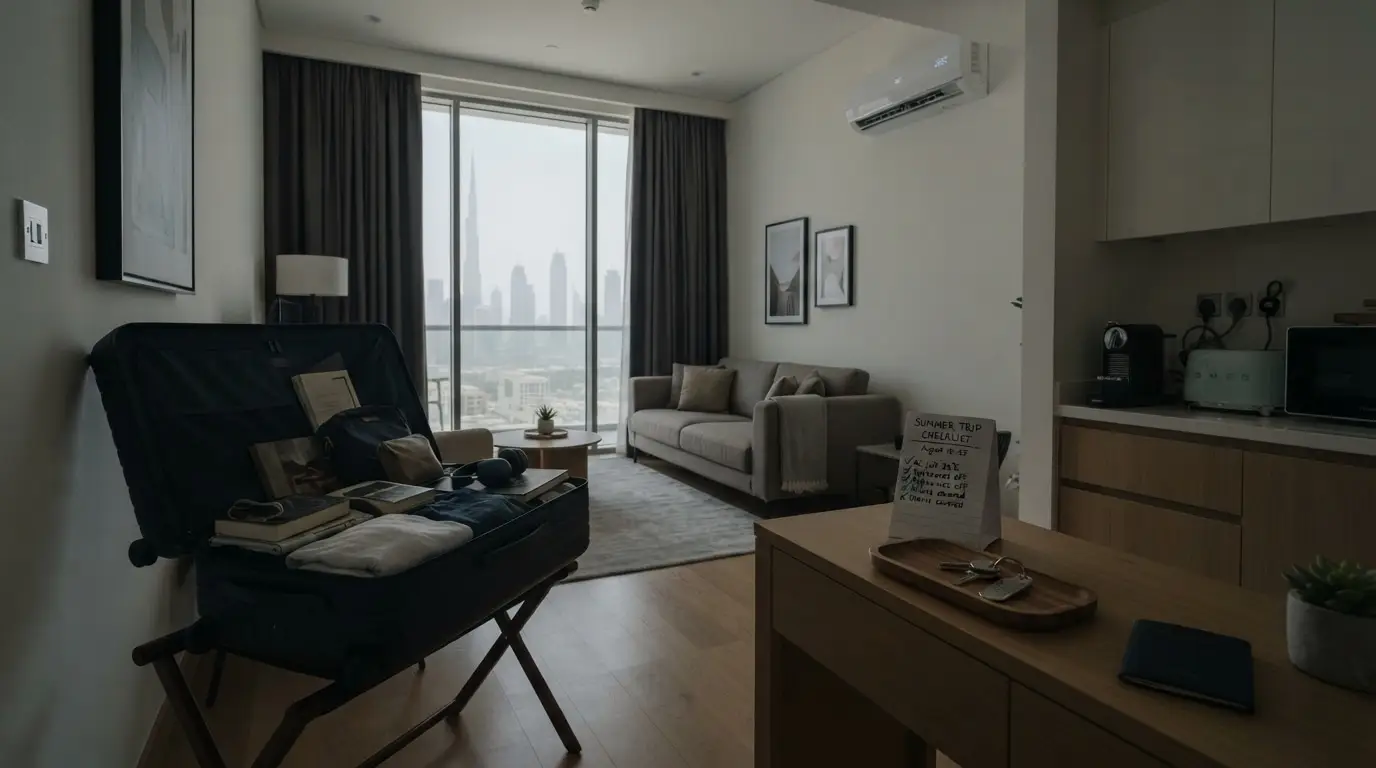
Carrying out a few after-summer travel home checks helps you confirm that everything is working normally before you settle back in. These checks are different from following a home checklist before travel, which focuses on preparing the property before you leave.
Returning to Dubai? Post-Vacation Home Checklist
What should you check first when you return home?
Before unpacking or switching everything on, walk through the property and use your senses. The following Dubai post-vacation home checklist takes you through the main areas in a safe, practical order.
Check for Leaks and Moisture Before Switching Things On
Check the floors, ceilings, walls, and cupboards. Look beneath sinks, around toilets, beside major appliances, near the water heater, and below AC vents or indoor units.
Should you inspect for leaks even when there is no standing water? Yes. Look for less obvious signs of moisture, including:
- Damp patches
- Swollen skirting boards
- Peeling paint
- Ceiling stains
- Corrosion
- A persistent musty smell
Do not switch on electrical fittings or appliances that have come into contact with water. Contact a qualified professional if you find an active leak, water entering through the ceiling, or moisture near wiring.
Inspect the AC Before Lowering the Temperature
Check the thermostat display before changing the setting, then put your senses to work:
- Look around the vents and indoor units for dripping, staining, or pooled water.
- Listen for rattling, buzzing, or grinding.
- Smell whether the air has an unpleasant odour.
- Feel if the airflow is unusually weak.
Switch the system on normally and give it time to cool a home that has been closed during Dubai’s summer. Selecting the lowest temperature will not cool it faster. The Dubai Electricity and Water Authority (DEWA) recommends setting home AC systems to around 24 degrees Celsius in summer and using auto mode for efficient cycling.
Persistent dripping, weak cooling, or a musty smell may indicate a dirty filter, blocked condensate drain, or another fault.
Do not open electrical panels or attempt refrigerant repairs yourself. Arrange a professional home AC service if the system leaks, makes unusual noises, or does not begin cooling normally.
Run the Taps, Flush Toilets, and Refill Dry Drains
Before running water, check beneath sinks and around visible connections for moisture. Start with the cold taps and let the water flow until it appears clear and normal, noting its smell, colour, pressure, and flow.
Flushing the taps replaces water that may have been standing in the pipes while you were away.
Flush each toilet and check that it stops filling normally. Run water into sinks, showers, baths, and little-used floor drains to refill traps that may have dried out and allowed drain odours into the room.
If discolouration, unusual smells, low pressure, leaking connections, or sewage-like odours continue, stop using the affected fixture and call a plumbing service for an inspection.
Check the Consumer Unit and Restart Appliances Gradually
Check whether a circuit breaker has tripped, but do not keep resetting one that disconnects again. DEWA advises contacting a qualified technician when this indicates an internal electrical fault.
Before restarting appliances, check plugs, sockets, and visible cables for damage, scorch marks, heat, or buzzing. Switch larger appliances on one at a time.
Stop if you notice sparks, a burning smell, a hot socket, or repeated tripping. These are not suitable DIY repairs and should be checked by a qualified electrician.
Reconnect Wi-Fi, Security, and Smart-Home Devices
Once the electricity is working normally, check the following:
- Router
- Smart-home hub
- CCTV cameras
- Video doorbell
- Smart lock
- Any connected leak or humidity sensors
Review notifications for disconnections, low batteries, unusual temperature readings, or water alerts. Devices that do not reconnect automatically may need restarting through their app or power supply.
If one device remains offline, check its power supply and connection rather than resetting the home’s electrical circuit.
Inspect the Fridge and Freezer Before Keeping Food
Check that both compartments feel properly cold and look for:
- Leaks
- Bad smells
- Damaged packaging
- Food that appears to have thawed and refrozen
Do not rely on smell or appearance alone to decide whether perishable food is safe. Frozen food may sometimes be refrozen when it still contains ice crystals or remains at 4°C or below. Discard questionable perishables if you cannot establish how long they were warm.
Look for Humidity, Mould, and Musty Smells
Inspect wardrobes, corners, window frames, curtains, soft furnishings, areas around AC vents, and behind accessible furniture.
Dark spots, condensation, warped materials, or a persistent musty smell may point to excess moisture. Find and address the source to prevent further mould growth.
Small marks on hard, washable surfaces may be cleaned after the moisture source is fixed and the area is dry. Extensive growth, affected porous materials, or dampness linked to a leak or AC fault needs professional assessment.
Check for Pest Activity
Inspect kitchen cupboards, bathrooms, drains, utility areas, and the spaces around balcony doors. Look for:
- Droppings
- Insect trails
- Shed wings
- Damaged food packaging
- Nests
- Live insects
Repeated activity, droppings in several locations, or signs inside food-storage areas should be addressed promptly.
Remove food waste, keep surfaces dry, and follow product instructions when using pest treatments around food, children, pets, or electrical equipment. Widespread activity may require professional pest control.
Inspect Balconies, Windows, and Outdoor Areas
Remove accumulated sand, leaves, and debris from balconies. Check drainage points before washing the area to prevent water from pooling or flowing towards the property.
Inspect balcony doors and window seals for gaps, dust, staining, or water entry. Proper sealing also helps the home cool efficiently.
Villa owners should also inspect:
- Outdoor taps
- Irrigation lines
- Garden areas
- Pool equipment
Look for leaks, unusually wet ground, blocked filters, damaged plants, or changes in the pool’s clarity and water level. Have an unattended pool tested and maintained before use.
When Should You Call a Home Maintenance Company?
Call a professional for:
- Active leaks
- Repeated breaker trips
- Burning smells
- AC failure
- Persistent drain odours
- Discoloured water
- Extensive damp
- Suspected pest activity
We Will Fix It can arrange the relevant AC, plumbing, electrical, handyman, or emergency services, while a residential annual maintenance contract can simplify future upkeep.
Frequently Asked Questions
Should I run taps before use?
Yes. Start with the cold taps and let the water run until it appears clear and the flow is steady. Check for unusual colour, smells, low pressure, or leaks beneath the sink. Arrange a plumbing inspection if anything unusual continues after flushing the taps.
Why does the bathroom smell after travel?
Water in sink, shower, bath, or floor-drain traps may evaporate while your home is empty, allowing drain odours into the room. Run water into each drain and flush the toilet. If the smell persists or quickly returns, a blockage, damaged seal, or plumbing fault may need attention.
Should I check the AC before lowering the temperature?
Yes. Before adjusting the thermostat, check for water, unusual noises, weak airflow, or unpleasant smells. Switch the AC on normally and allow it time to cool the property. Setting it to the lowest temperature will not cool the room faster and may overlook an existing fault.
Make Your Return Home Easier
A careful home restart can help you catch leaks, AC faults, electrical concerns, and other problems before they worsen. If something does not look, sound, or smell right, We Will Fix It’s maintenance services can help restore your home safely. Book a visit and settle back in with one less task to manage.